How Much Does a Day in Gyeongju Cost? 2026 Entrance Fees and Budgets
A day in Gyeongju costs surprisingly little for the entrance fees alone, most sights charge ₩3,000 or nothing at all, as of August 2026. The gyeongju trip cost entrance fees question that lands in my inbox most often comes from travelers who remember older guidebooks quoting temple fees that no longer exist. This piece runs the real 2026 fee table first, then three worked budgets from shoestring to guided, and the extra costs that actually move the total, all in the currency you'll see at the gate.
Quick answer
The famous sights here now cost almost nothing to see: Bulguksa and Seokguram are free, and the paid sites top out at ₩3,000 (about $2) each. A DIY day from Busan runs roughly $19 to $45 depending on how you eat and move, while guided full days from Busan start at $40.
Key takeaways
- Entry fees are nearly free: Bulguksa and Seokguram cost nothing, other sites cap at ₩3,000 (about $2)
- The combined Donggung and Daereungwon ticket is ₩4,000 (about $3), cheaper than paying separately
- Transport, not entry fees, is what actually moves your total, see getting there from Busan for the real numbers
- Guided full days from Busan start at $40, transport and sequencing included, see guided full days from Busan
- Still deciding if the day is worth it at all? read is Gyeongju worth visiting
Entrance Fees at a Glance (2026)
This is the table I wish existed when I started guiding here, because older sources still quote temple fees that were abolished years ago. Everything below is the current 2026 tariff.
| Site | Adult fee | Notes |
|---|---|---|
| Bulguksa Temple | Free since May 2023 | Admission fee abolished nationwide for Buddhist temples |
| Seokguram Grotto | Free since May 2023 | Same policy; a parking fee still applies at the hilltop lot |
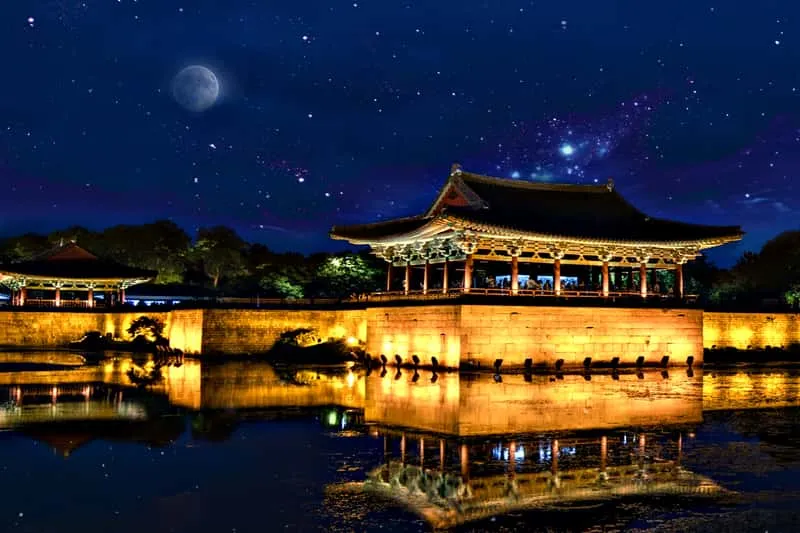
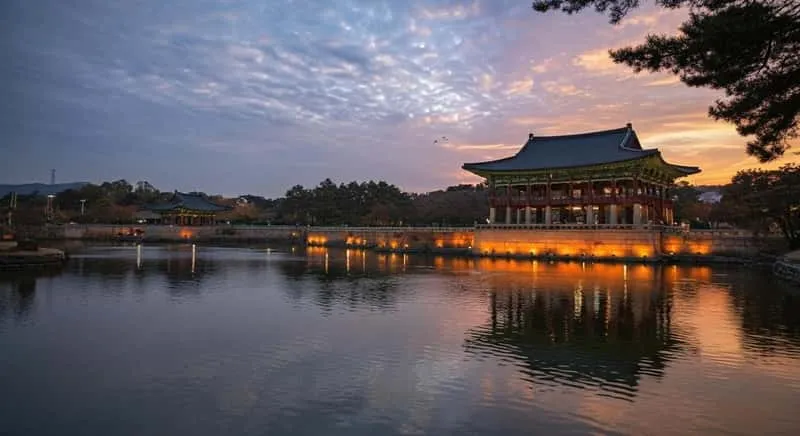
| Donggung Palace & Wolji Pond | ₩3,000 (about $2) | Open 09:00–22:00; the after-dark visit is the signature one |
| Daereungwon Tomb Complex | ₩3,000 (about $2) | Includes the Cheonmachong tomb interior |
| Combined Donggung + Daereungwon ticket | ₩4,000 (about $3) | Cheaper than buying the two separately |
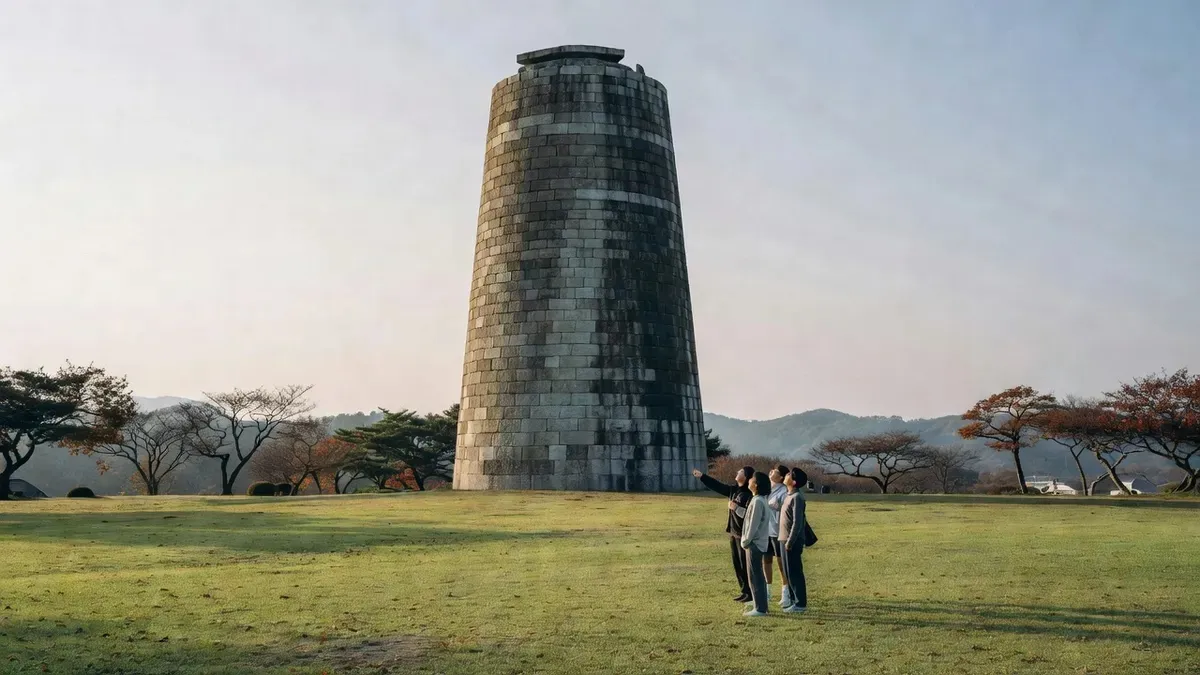
| Cheomseongdae observatory | Free | Open lawn, viewed from outside |
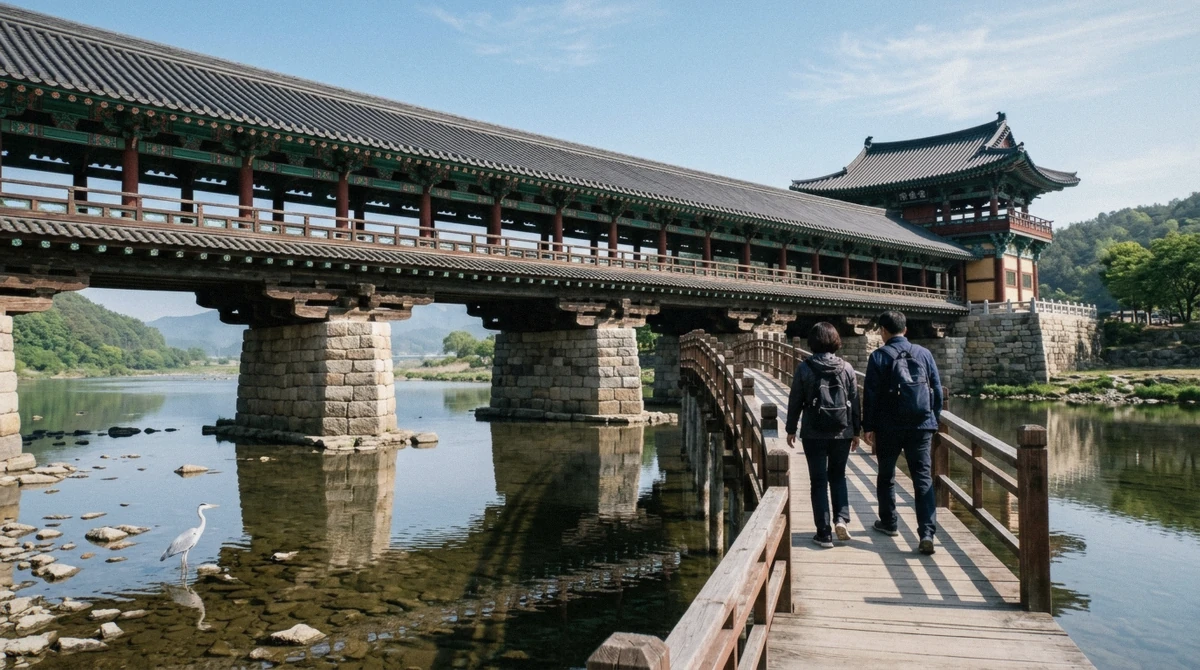
| Woljeonggyo Bridge | Free | Floodlit at night, no ticket needed to cross |
Last verified: August 2026. Figures above use an exchange rate of roughly ₩1,400 to the US dollar (August 2026); check the live rate before you travel since it does shift the dollar figure slightly. For the official tariffs themselves, see Gyeongju city and the Korea Tourism Organization.
Tickets for the paid sites are sold at a small booth right at each entrance, there's no need to book ahead or buy online for a normal day, and the lines rarely run more than a couple of minutes outside of the cherry blossom weekend crush. Keep a small amount of cash on hand regardless, some smaller ticket booths and Seokguram's hilltop parking machine are more reliably cash-friendly than the city's larger card-first venues.
Why the Temples Are Free Now
In May 2023, Korea abolished admission fees at Buddhist temples nationwide, including Bulguksa and Seokguram, both of which used to charge around ₩6,000. I remember the change well, it was one of the biggest shifts to a Gyeongju day's real cost in years, and it's the reason a lot of older trip-cost articles online are now simply wrong. The practical upshot is that the two sites most visitors travel here specifically to see now cost nothing, which shifts your real budget toward transport and food rather than tickets.
It also changes the math on whether a guided tour is worth the price. Before May 2023, part of what you paid a guide for was simply the ticket cost of getting into Bulguksa and Seokguram, folded quietly into the tour price. Now that both are free, the price of a guided day is paying almost entirely for transport, sequencing and a guide's knowledge, not for gate access, which is worth knowing when you're weighing a $40 guided day against doing it yourself.
If you're chasing the fuller trip-cost picture including how much the temple fee change moved Korea's national tourism numbers, the entrance-fee history is a useful side note but not something this page needs to relitigate beyond the fact itself.
The Guided Alternative, for Comparison
Before the worked budgets below, here's what the guided side of the cost comparison actually looks like.
 from $40Most Reviewed — 2,451 Reviews, 4.8★
 Gyeongju Day Trip from Busan to the Three Kingdoms Capital
The most-reviewed Busan-to-Gyeongju day trip, covering Korea's ancient capital and its Silla Dynasty heritage. Explore Bulguksa Temple and Seokguram Grotto, the Daereungwon tomb complex, Gyochon Village and Woljeonggyo…
- Explore Gyochon Village and Woljeonggyo Bridge with river and hanok views
- See Seokguram Grotto, a UNESCO World Heritage Buddhist temple with its stone Buddha
- Wander Yangdong Folk Village, one of Korea's largest UNESCO traditional villages
- Discover Cheomseongdae, the oldest astronomical observatory of the Silla dynasty
 from $42Best Value from Busan — 5.0★
 Gyeongju Full-Day Small-Group Tour from Busan with Hotel Pickup
A well-paced small-group day from Busan into Korea's ancient capital. With convenient hotel pickup, you'll see Bulguksa Temple, the Daereungwon royal tombs, Cheomseongdae observatory and the magical night…
- Discover the ancient Silla capital of Gyeongju on a full day from Busan
- Visit Bulguksa Temple, a UNESCO World Heritage Buddhist masterpiece
- Explore the Daereungwon royal tombs and Cheomseongdae, Asia's oldest observatory
- Enjoy the magical night reflections at Donggung Palace and Wolji Pond
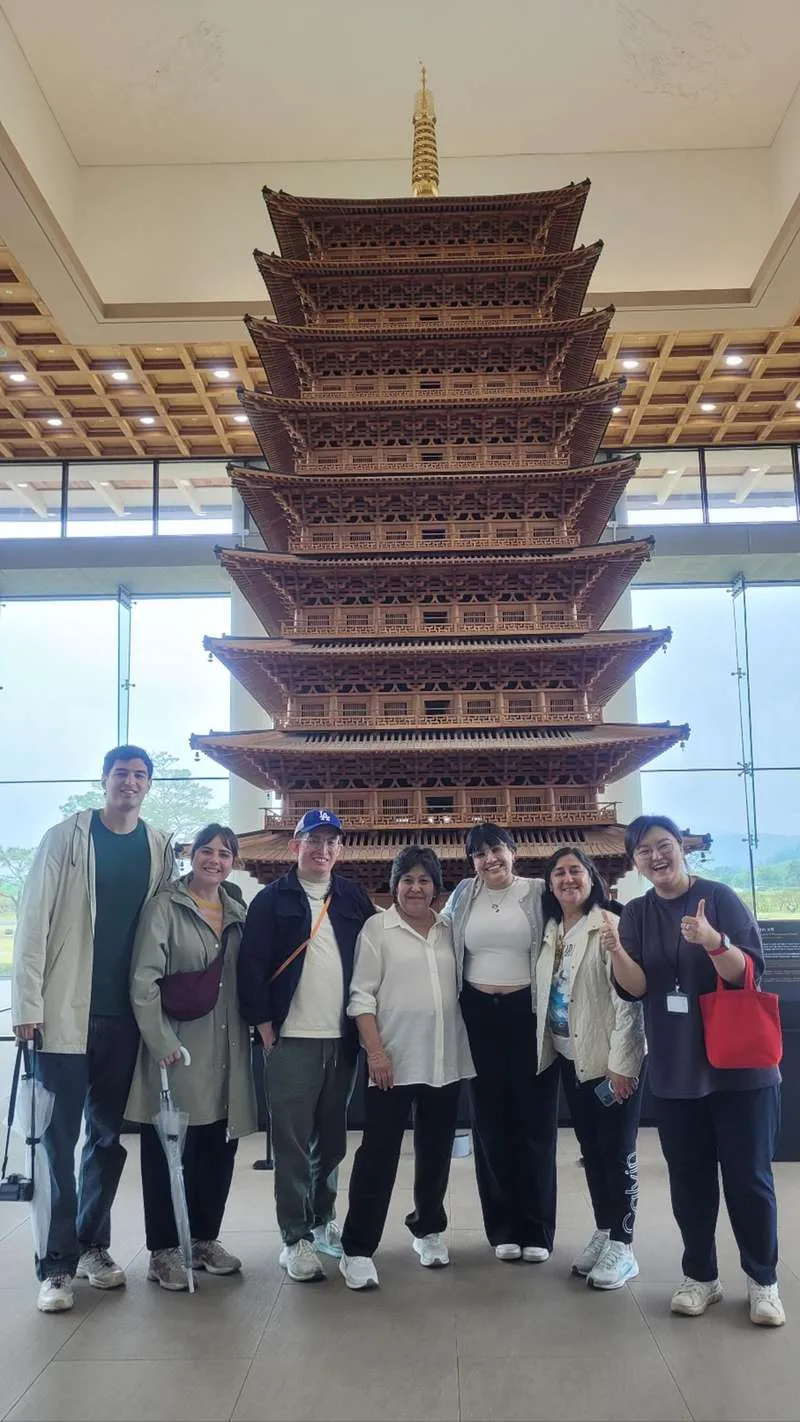 from $5Official City Docents — $5
 Gyeongju Official Walking Tour with City Heritage Docents
A short, story-driven heritage walk led by official Gyeongju city interpreters and 5th-generation locals. Part of your small fee helps preserve the city's UNESCO World Heritage, and you'll…
- Led by official Gyeongju city heritage interpreters
- Story-driven walking tour with 5th-generation Gyeongju locals
- Part of your fee helps preserve Gyeongju's UNESCO World Heritage
- Includes a complimentary Silla postcard keepsake
Three Sample Budgets, Worked Through
These three totals assume a single traveler starting from Busan, which is the most common trip shape for this question.
| Budget type | What it covers | Total |
|---|---|---|
| Shoestring DIY from Busan | Bus both ways, the ₩4,000 combined ticket, simple meals from ₩10,000–15,000 | roughly $19–25 |
| Comfortable DIY from Busan | Bus both ways, the combined ticket, a sit-down lunch, a local bus or short taxi out to Bulguksa | roughly $35–45 |
| Guided full day from Busan | Transport, guide and site sequencing handled, food usually extra | $40–55 including a meal |
The shoestring version leans hard on the fact that Bulguksa and Seokguram are free and the combined ticket covers the rest of the walkable core for ₩4,000. The comfortable version adds real comfort, a proper lunch instead of a snack, less time spent figuring out bus routes, without jumping all the way to a private booking. What jumps the total between shoestring and comfortable isn't the entrance fees at all, which stay identical in both rows, it's food quality and how much walking versus riding you're willing to do to reach Bulguksa.
Travelers who want the hanbok experience built into a packaged private day rather than a separate rental should look at the hanbok-and-driver day, which folds the costume, the car and the guide into one price instead of stacking them separately, a genuinely different math than adding a rental fee on top of a DIY day.
What a Guided Day Costs and What the Price Buys
Group day trips from Busan run $40 to $54, that band covers the most-reviewed departures and buys a full day of transport, a guide and the site sequencing worked out for you, so you're not calculating bus transfers on the fly. Private days run from $71 to $382, the wide range reflects group size, whether a dedicated driver is included, and add-ons like the hanbok rental on the top-end option.
If you just want a taste of guided context without committing to a full day, the official docent walking tour runs a story-driven 30-minute walk for $5, led by city heritage interpreters, a genuinely different product from a full-day tour but a real option if your budget or your schedule is tight.
What the price buys beyond transport is worth naming plainly, since it's easy to assume a $40 group day and a $190 flagship day are the same experience at different price points, and they aren't. Group departures move on a fixed schedule with a set number of stops and a shared guide's attention across the whole van, which is genuinely fine for most first-time visitors. Private days at $71 and above buy flexibility, a guide's full attention, and usually a later or earlier start than the group schedule allows, plus the option to linger somewhere the group tour wouldn't.
Neither is a bad deal, they're simply solving different problems, and the fee table above only ever covers what you pay at the gate, not what a guide adds on top.
Extra Costs to Budget For
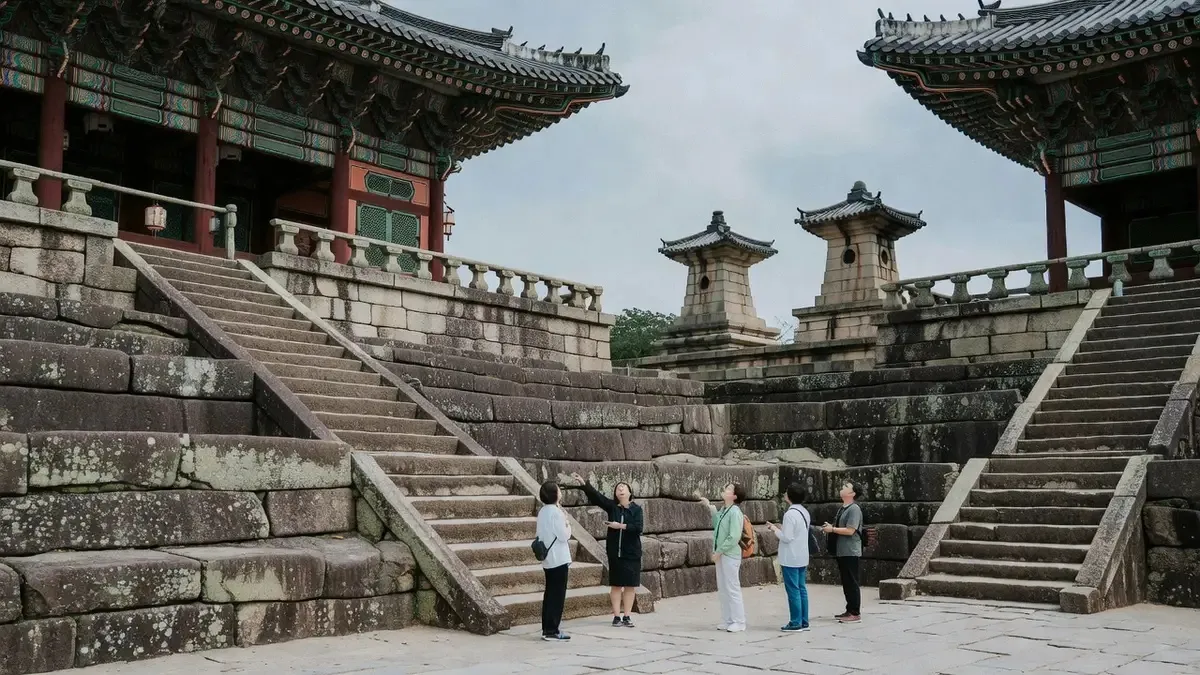
Beyond entrance fees, a handful of real extras can move your total. Meals run roughly ₩10,000 to ₩15,000 (about $7–11) for a simple sit-down lunch, and a coffee or a sweet at one of Hwangnidan-gil's hanok cafes adds a few dollars more if you stop there between the tombs and the palace. Seokguram's hilltop parking lot still charges a fee even though the grotto itself is free to enter, worth budgeting a small amount for if you're driving yourself rather than taking transit or a tour.
Hanbok rental in the old town is a genuine optional extra, prices vary enough by shop that I won't quote a single figure, budget it as a discretionary add-on rather than a fixed line item, or take the packaged hanbok-and-driver day if you'd rather have it bundled into one price instead of shopping around.
Souvenirs are the other line item people forget to budget for. Small stalls around Daereungwon and Hwangnidan-gil sell postcards, pressed-flower bookmarks and local snacks at prices low enough that they rarely break a shoestring budget, but they add up if you're buying gifts for a group back home. Tipping isn't expected anywhere in Korea, including on guided tours, so you can leave that line off your budget entirely, and it's one of the few genuine cost savings versus destinations where tipping guides is the norm.
Weather-related costs are worth a mention too, a sudden summer downpour rarely cancels an outdoor day here outright, but it can push you into buying a cheap umbrella or ducking into a paid cafe longer than planned, a small, real cost that a fee table alone won't show you.
How to Pay Less
Buy the combined Donggung and Daereungwon ticket instead of two separate ₩3,000 tickets, it's ₩4,000 total and the small saving adds up if you're already counting won. Lean on the sites that are free by design, Bulguksa, Seokguram, Cheomseongdae and Woljeonggyo Bridge together already form most of a satisfying day before you spend a single won on a ticket.
If you're traveling in a small group, splitting a private tour's cost per person often lands close to what two or three people would pay separately for a guided group day, so do that math before assuming shared is always cheaper, the per-person gap narrows fast once a private car is split three or four ways. Eat where locals eat rather than in the tourist strip directly facing Daereungwon's main gate, prices for the same bowl of food run noticeably higher a block away from the crowds than a short walk further into Hwangnidan-gil's side streets. Anyone weighing the DIY route in more depth should also see getting there from Busan for the real bus and rail numbers, since choosing the intercity bus over the KTX is itself one of the simplest ways to trim the total.
Is It Worth the Price?
At these numbers, yes, for most travelers. Free temples and a ₩4,000 combined ticket make Gyeongju one of the cheaper full days you'll spend in Korea, and even the guided option starts at $40, less than many single-attraction tickets elsewhere in the country. The price question and the worth-it question aren't quite the same thing though, a cheap day can still be the wrong day if you only have a few free hours and Bulguksa's transfer time doesn't fit your schedule.
For the fuller honest verdict, including who should actually skip the day regardless of price, see is Gyeongju worth visiting. Anyone comparing options before booking should compare Gyeongju city tour prices directly rather than guessing from a single listing, since the group and private tiers genuinely serve different trips at different prices.
Frequently Asked Questions
How much do the individual entrance tickets cost in Gyeongju?
Donggung Palace and Daereungwon each cost ₩3,000 (about $2) for adults, or ₩4,000 (about $3) combined. Bulguksa, Seokguram, Cheomseongdae and Woljeonggyo Bridge are all free. See the full entrance fee table above for exact rows.
Why are Bulguksa and Seokguram free to enter now?
Korea abolished Buddhist temple admission fees nationwide in May 2023. Both sites used to charge around ₩6,000; today neither charges anything to enter, though Seokguram's hilltop parking lot still has its own fee.
Is the combined Donggung and Daereungwon ticket worth buying?
Yes. At ₩4,000 it costs ₩2,000 less than buying the two ₩3,000 tickets separately, and both sites sit close enough together that most visitors do both in one afternoon anyway.
How much should I budget for a full day in Gyeongju including transport?
A DIY day from Busan runs roughly $19 to $45 depending on meals and how you handle the Bulguksa transfer. A guided day starting at $40 folds transport into the price already, see the guided day trips for the exact options.
Do I need cash for entrance fees, or can I pay by card?
Most ticket counters in Gyeongju accept card payment alongside cash, though carrying a small amount of won is still sensible for the smaller free-site parking fees, local bus fares and some of the smaller booths that stay cash-friendly even as the city trends toward card-first payment.
Is a guided tour worth the extra cost over doing it yourself?
For many travelers, yes, at $40 the price gap over a comfortable DIY day is small once transport and time are counted honestly. For the fuller reasoning on who benefits most, see is Gyeongju worth visiting.
So the real number to remember is this: the sights themselves cost almost nothing, and what you actually pay for is transport and time, whether that's a bus ticket and a bit of patience or a guided day that hands you both back.