Best Time to Visit Gyeongju: Month by Month
The best time to visit Gyeongju is April or October, when daytime temperatures sit in a comfortable range and neither summer heat nor winter cold gets in the way of a full day outdoors. As of August 2026, best time to visit gyeongju is a question I answer differently depending on whether someone is chasing cherry blossoms, avoiding crowds, or simply trying to dodge the monsoon. The runner-up window is late spring into early June, still pleasant but past peak bloom, and the month to avoid outright is August, when heat, humidity and the year's heaviest rain converge at once. This guide runs the real month-by-month conditions behind that verdict.
Quick answer
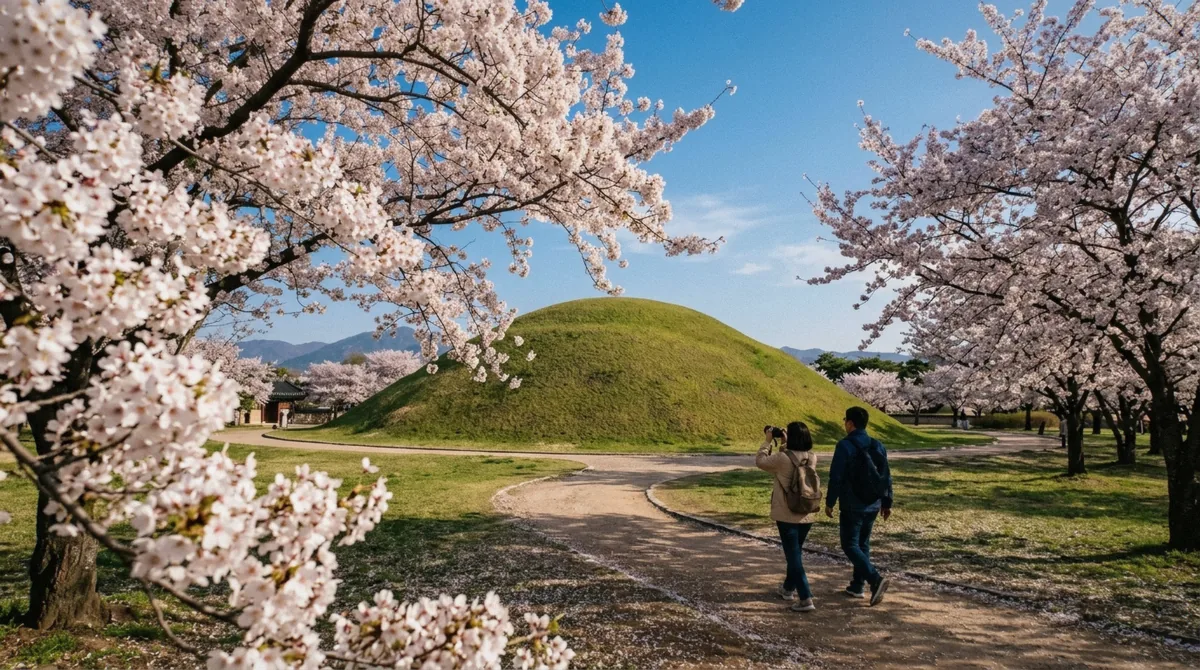
April and October are the best months for a gyeongju city tour, with comfortable daytime temperatures and manageable crowds outside of the cherry blossom and Chuseok peak weekends. Cherry blossoms bloom late March to early April over the tomb mounds and along the Bomun Lake trail, while foliage runs late October to mid November.
Key takeaways
- Best window: April and October, comfortable temperatures and the fewest weather-related compromises
- Cherry blossoms bloom late March to early April over the tombs and along the Bomun Lake trail
- Avoid peak August heat, highs near 31°C with the year's heaviest rain around 212 mm
- Foliage runs late October to mid November, plan around Chuseok holiday crowds if your dates overlap
- For blossom or foliage week, book the flagship UNESCO heritage day ahead of time
- Plan your hours around the season with the one-day Gyeongju route
Which Tour Fits Which Season
Before the season-by-season detail, here's the range of days that actually run well across the calendar, from peak bloom to a quiet winter private tour.
 from $190Most Booked — 4.9★, 133 Reviews
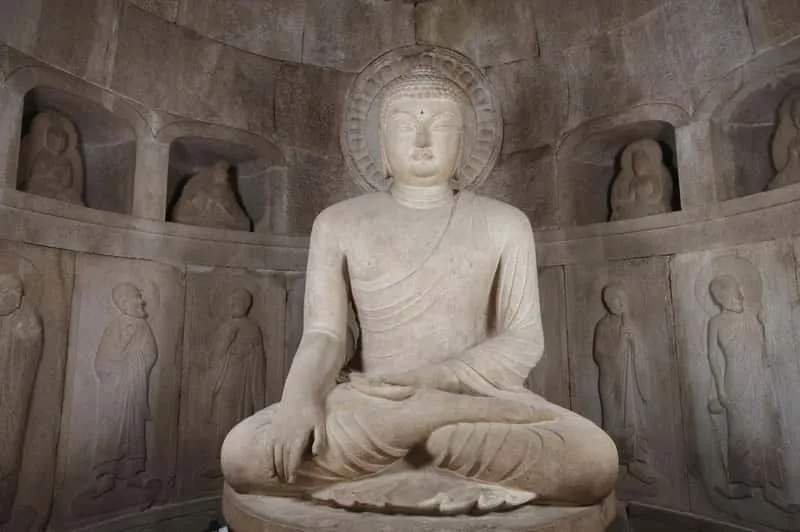
 Gyeongju UNESCO Heritage Tour Including Bulguksa Temple
A full-day journey through Gyeongju, the 'museum without walls', taking in the city's headline UNESCO World Heritage sites. Begin with a convenient pickup from Busan or Gyeongju, then…
- Full-day guided tour of Gyeongju's UNESCO World Heritage sites
- Visit Bulguksa Temple and Seokguram Grotto, national treasures of Korea
- Explore the 'museum without walls' with hotel pickup from Busan or Gyeongju
- See royal tombs, ancient temples and Silla-era history sites
 from $382Private + Hanbok · With Driver
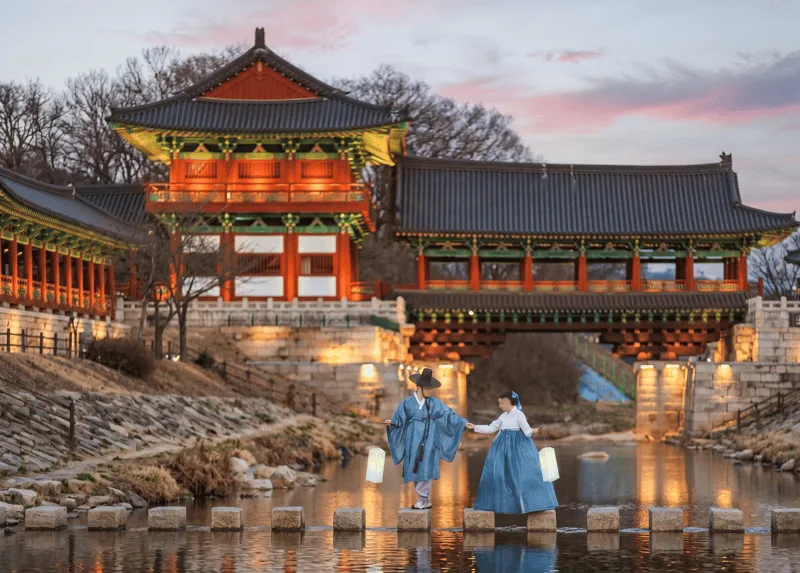
 Gyeongju Private Tour with Hanbok Rental & Driver
A fully private day with your own driver: visit Bulguksa Temple and Seokguram Grotto before the crowds, lunch on vibrant Hwangnidan-gil, then slip into a traditional hanbok to…
- Explore Gyeongju's top sights on a private tour with your own driver
- Visit Bulguksa Temple and Seokguram Grotto before the crowds arrive
- Wear a traditional hanbok through Daereungwon's royal tombs and Donggung Palace
- Customise your itinerary and explore the historic heart of the city at your own pace
 from $193Starts in Gyeongju — 5.0★
 Private Gyeongju UNESCO Tour Starting in Gyeongju
A private tour that begins directly in Gyeongju — no long commute from Busan — with an independent local guide rather than a scripted route. Visit Bulguksa Temple…
- Explore Gyeongju with an independent local guide, not a scripted tour
- Visit Bulguksa Temple, Seokguram Grotto and key UNESCO World Heritage sites
- Begin directly in Gyeongju for more time in the city and less time travelling
- Discover hidden viewpoints and the mythology of the thousand-year Silla kingdom
Seasons at a Glance
Read the Verdict column as the honest summary, the columns beside it explain why.
| Season | Weather | What Blooms or Turns | Crowds | Verdict |
|---|---|---|---|---|
| Spring (March–May) | Mild, warming through the 20s°C | Cherry blossoms late March to early April | High during blossom weekends | Best overall, book early |
| Summer (June–August) | Hot and humid, August highs near 31°C | Lush green tomb-mound lawns | Moderate, lower than spring or autumn | Avoid midday heat |
| Autumn (September–November) | Cool and clear, comfortable | Foliage late October to mid November | High around Chuseok and peak foliage weekends | Best overall, tied with spring |
| Winter (December–February) | Cold, January nights near -3°C | Bare trees, quiet stone monuments | Low, the quietest season | Good for a quiet, cold visit |
Spring and autumn are typically tied for the best overall verdict, both trade a short window of real crowds for otherwise comfortable, photogenic conditions. Summer is the season to actively plan around rather than simply endure, and winter rewards travelers who don't mind the cold in exchange for having the tomb park largely to themselves. None of the four seasons closes the sites entirely, the difference between them is comfort and crowd tolerance, not access, which is worth remembering if your travel dates are already fixed and you're wondering whether to reschedule.
Spring (March to May): Cherry Blossoms Over the Tombs
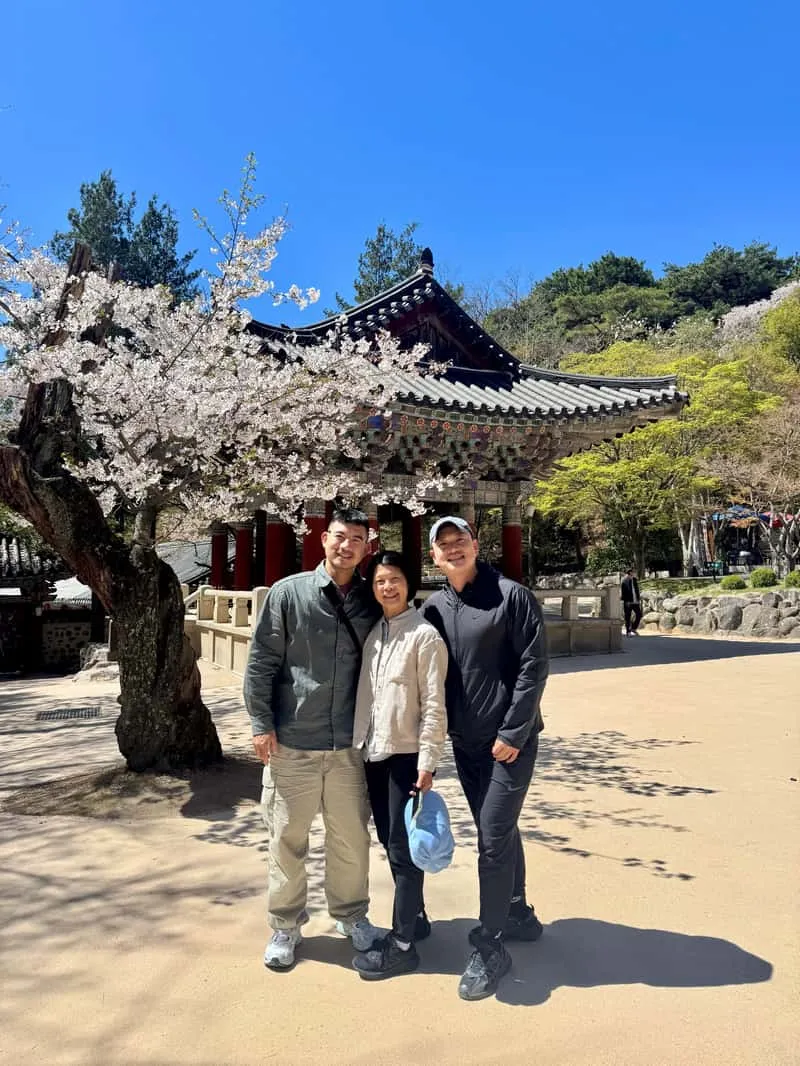
Spring is when Gyeongju looks the way it does on postcards. Cherry blossoms typically reach full bloom in the last days of March into the first week of April, and the tomb mounds at Daereungwon framed against pink blossoms are the single most photographed scene in the city that week. The Bomun Lake trail, a 3 km lakeside path lined with over 2,000 cherry trees, blooms alongside the tombs and is worth the extra half day if you have it.
Bulguksa's blossoms open slightly later than the tombs, a quirk of its higher elevation, which means a well-timed trip can catch two separate bloom windows a few days apart.
Accommodation fills fast for the blossom week specifically, book your stay and, if you want a guided day during peak bloom, a tour like the flagship UNESCO heritage day, well ahead rather than assuming a walk-up slot will be available.
Summer (June to August): Monsoon Heat and an Evening Strategy
Summer is Gyeongju's toughest season for outdoor sightseeing. August highs run near 31°C with lows around 23°C, humidity peaks, and August is also the wettest month of the year, averaging roughly 212 mm of rain over about 11 rainy days. July through September carries the region's monsoon and typhoon-remnant rain, though the sites themselves stay open through most of it, they simply get wetter and stickier to walk around.
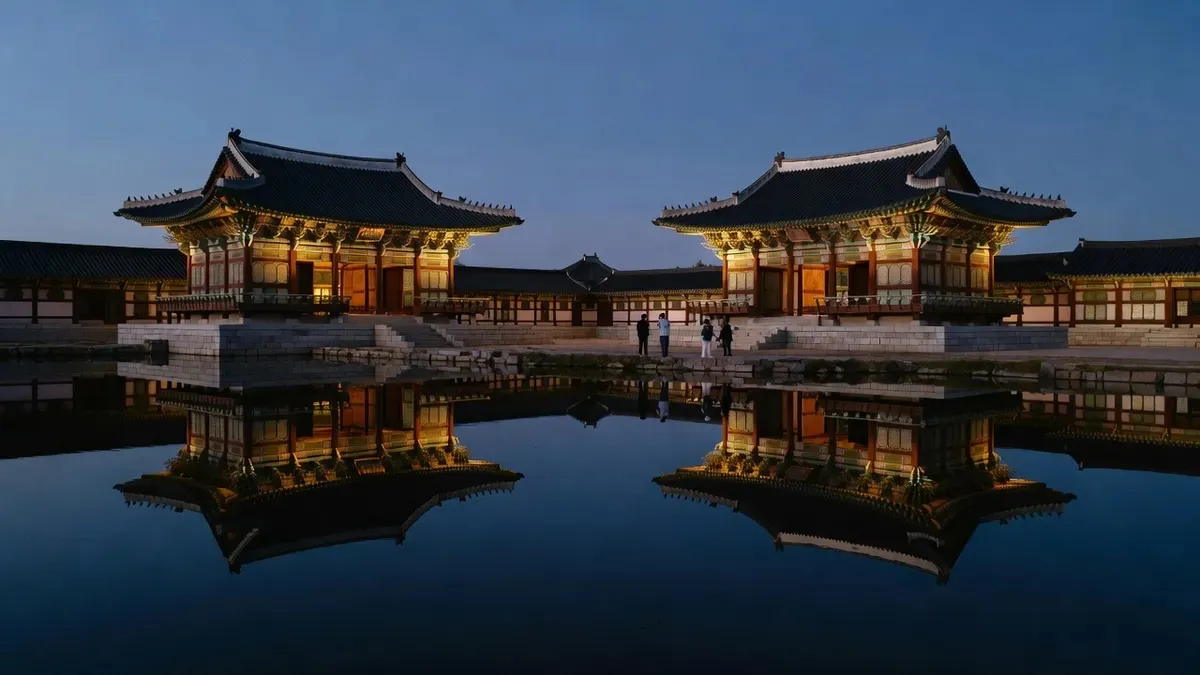
The strategy I give summer visitors is simple: start early and end late, skip the midday hours entirely if you can. A dawn start at Bulguksa beats the heat and the crowds together, and the evening belongs at Donggung Palace and Wolji Pond, where the lit reflection over the pond is genuinely more comfortable to enjoy after the day's heat breaks. Private days with a dedicated driver, like the hanbok-and-driver day, make it easy to build a schedule around the day's heat rather than fighting a fixed group departure time.
Autumn (September to November): Foliage and Chuseok Crowds
Autumn foliage typically runs late October into mid November, with the Tohamsan slopes above Bulguksa turning about two weeks ahead of the lower tomb park, so a single trip timed well can catch color at two elevations. Temperatures cool into a genuinely comfortable range for a full day of walking, and the humidity of summer is gone by mid September.
The one trap to watch is Chuseok, Korea's autumn harvest holiday, which lands in late September or early October depending on the lunar calendar and moves every year. Domestic travel spikes hard around it, so if your dates happen to overlap, book everything, transport, accommodation and any guided day like the flagship UNESCO heritage day, well ahead, or shift a few days either side of the holiday if your schedule allows it.
Winter (December to February): Cold, Clear and Quiet
Winter is Gyeongju's overlooked season, and honestly one of my favorites to guide. January is the coldest month, with highs around 7°C and nights dropping to roughly -3°C, and December is the driest month of the year at around 25 mm of rain. What you get in exchange for the cold is a tomb park with almost no one else in it, clear skies more often than not, and none of the blossom or foliage crowd logistics.
It's not a season for lingering outdoors for hours at a stretch, dress in real layers and plan indoor stops between sites. A private day, like the starting-in-Gyeongju UNESCO tour, suits winter well since the pace can flex around the cold rather than sticking to a fixed group schedule.
Temperature and Rainfall by Month
Figures below follow typical Korea Meteorological Administration climate normals for the region; treat them as the general pattern rather than a forecast for your exact dates.
| Month | High | Low | Rain |
|---|---|---|---|
| January | 7°C | -3°C | Low |
| February | Mild, rising | Cold | Low |
| March | Mild | Cool | Low to moderate |
| April | Warm | Mild | Moderate |
| May | Warm | Mild | Moderate |
| June | Hot, humidity building | Warm | Moderate to high |
| July | Hot, humid | Warm | High |
| August | 31°C | 23°C | 212 mm |
| September | Warm, cooling | Mild | Moderate |
| October | Mild | Cool | Low to moderate |
| November | Cool | Cold | Low |
| December | Cold | Cold | 25 mm |
By the actual numbers, January is the coldest month, August is both the hottest and the wettest, and December is the driest month of the year. The swing between January's -3°C nights and August's 31°C afternoons is a genuinely wide range for a single small city, and it's the underlying reason the season sections above land on such different advice for what to wear and when to walk outdoors. Check the current forecast close to your travel dates regardless, single-day weather can still swing outside a seasonal norm.
Best Season by Traveler Type
If you're a photographer chasing the best light and blossoms
go in April, the clearest blossom light and thinner crowds than the single peak weekend.
If you're traveling with kids
go in October, comfortable temperatures with no monsoon rain risk to disrupt an outdoor day.
If this is your first visit and you want the safest weather bet
go in April or October, both are the most forgiving windows with the least chance of a washed-out day.
If you're a budget traveler who doesn't mind the cold
go in winter, December through February, the quietest season with the fewest crowds anywhere in the city.
If you want cultural energy even with more people around
go in late September or early October near Chuseok, accepting the trade-off of real holiday crowds.
Best Time of Day
Morning has the real advantage here. We typically build a day around a 09:00 start at Bulguksa, ahead of both the day's heat and the bulk of the tour groups, then work back into the central cluster as the morning goes on. Donggung Palace and Wolji Pond are the one clear exception, staying open until 22:00 specifically because the after-dark view of the lit pavilions reflected in the pond is the day's signature moment, not something to rush through at midday.
The one time to actively avoid is a hot summer early afternoon at any outdoor site, when heat and crowds peak together.
The middle of the day, roughly late morning through mid afternoon, is when the walkable core around Daereungwon and Cheomseongdae gets its heaviest foot traffic, tour buses and independent visitors arrive on largely the same schedule. Shifting those sites to either earlier or later in the day, and saving a sit-down lunch for that crowded window instead of a sightseeing stop, makes a noticeable difference without needing to change the season you travel in at all.
So, When Should You Go?
Go in April or October if your dates are flexible, comfortable temperatures, manageable crowds outside the single peak blossom or foliage weekend, and the fewest weather compromises of any season. If those months don't fit your trip, late spring into early June is a solid budget-conscious runner-up, past peak bloom but still pleasant. The one month I'd steer almost anyone away from is August, between the heat, the humidity and the year's heaviest rain, it's the hardest month to enjoy a full day outdoors here.
Whatever season you land on, book a Gyeongju heritage day tour that matches the pace you actually want, and pair it with the one-day route so the hours match the season.
Frequently Asked Questions
When do the cherry blossoms bloom in Gyeongju?
Typically late March into the first week of April, over the tomb mounds at Daereungwon and along the Bomun Lake trail's 2,000-plus cherry trees. Bulguksa blooms slightly later due to its higher elevation. Book accommodation and any guided day well ahead of this window.
How does Chuseok affect a trip to Gyeongju?
Chuseok, Korea's autumn harvest holiday, lands in late September or early October depending on the lunar calendar and brings a real spike in domestic travel. If your dates overlap, book transport and tours early, or shift your visit a few days either side of the holiday.
Is Gyeongju too hot to visit in summer?
August is genuinely tough, with highs near 31°C and the year's heaviest rain, but it's not off-limits. Start early at Bulguksa and save Donggung Palace for after dark, when temperatures drop and the lit pond view is at its best.
Is winter a bad time to visit Gyeongju?
No, just a cold one. January nights drop to around -3°C, but the trade-off is a nearly empty tomb park and clear skies. A private day like the starting-in-Gyeongju tour lets you flex the pace around the cold.
What's the best time of day to see Bulguksa Temple?
Morning, ideally around a 09:00 start, ahead of both the heat and the tour groups. Save Donggung Palace, open until 22:00, for after dark instead, since it's built to be seen once the sun is down.
Does rain ruin a day in Gyeongju?
Not usually. Sites stay open through most rain, including the July to September monsoon window, though a genuinely wet day is more comfortable with a museum stop or covered stretch built into the plan rather than powering through outdoors.
Pick your season by what you're willing to trade: blossoms or foliage against real crowds, or quiet solitude against the cold, and the rest of the planning falls into place from there. None of the four seasons closes the door on a visit outright, they simply ask something different of your schedule and your patience, and the honest verdict above still stands regardless of which trade-off you're comfortable making.